
The best takeaways from A Thousand Plateaus are those that happen to you subconsciously before you can articulate them in relation to the book. This passage had puzzled me for a long time:
“There is no ‘like’ here, we are not saying ‘like an electron,’ ‘like an interaction,’ etc. The plane of consistency is the abolition of all metaphor; all that consists is Real. These are electrons in person, veritable black holes, actual organites, authentic sign sequences.”
What does it mean to abolish all metaphor? How does an electron interact with something as abstract as a sign, etc?
But in hindsight, it was doing something to me. I have been struggling with and getting into fights about ’emergence’ (did we ever discuss this?) as a fake solution to the problems of so-called ‘complexity science’. Entire programs now give PhDs in complexity that are predicated on the premise that different sciences study different levels of reality, the whole is more than the sum of its parts, mind is not reducible to brain, social facts are autonomous from the people which they inhabit like ghosts, ant colonies are superorganisms, etc. The problem for me has been that all of these propositions are circular and just assume what they claim to assert. Everything of substance in the statement—The ant colony emerges from interactions between the ants but is irreducible to them—is hidden inside the verb ’emerges’, which is the only load-bearing term.
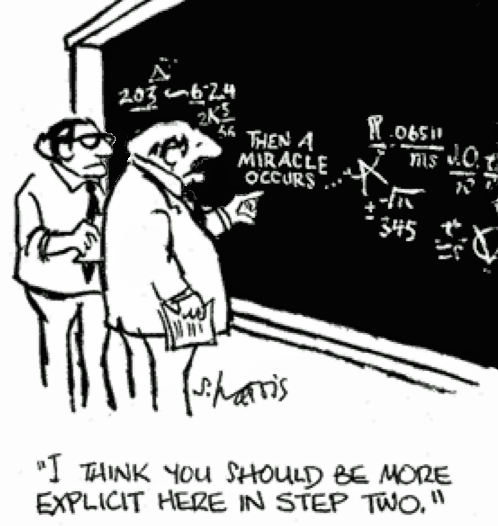
I have yet to read a satisfying account of where the novelty comes from exactly, what the mechanism is, why it arises there as opposed to elsewhere, how something emergent can be irreducible and on its own level but also vulnerable to the levels ‘below’ it
Now, Deacon gives part of the solution in Incomplete Nature by reframing the problem. Ironically, he says the novelty comes not from addition but subtraction (Kohn later calls this “constitutive absence”). Reality is chaotic and already too creative. The challenge of order-building is not to create something new but to tame the novelty that is exploding everywhere in ontology.
ATP takes this to the extreme. The ‘absence’s are constituted by operations of coding (time) and territorialization (space). The conceptual purchase is that there are no new ‘levels’ anywhere anymore (“abolition of all metaphor”).
So fromations in the plane of composition keep collapsing back into immanence (a forest fire, a short circuit, climate change, an old flame, etc.)
But the bigger purchase I think is that ATP tells you basically that ’emergence’ is a fake problem created by the institutions of Royal Science, where disciplines need to justify their existence for fear of collapsing into a combination of physics and fintech. So for instance if you read Durkheim’s Rules of Sociological Method, he’s constantly trying to demarcate sociology from psychology, from philosophy, from pseudo-science, etc because he wants to buy credibility and autonomy for his own Sociological institution. The same anxiety has bedeviled cognitive scientists who worry about getting eliminated in favor of neuroscience, the level below.
Basically, once you are within the frame of Royal Science, you can’t escape the ridiculous implication that your physicist friend has more access to reality than your sociologist friend. Because even though emergence has established that society is its own distinct level, it along with everything else has to ultimately “bottom out” in physics somehow, or else we lose our membership in materialism.
So with emergence, all the disciplines of Royal Science get to keep their own level and their own ‘autonomy’, but at the price of mystifying their own subject matter and staying siloed from other domains of inquiry.
